
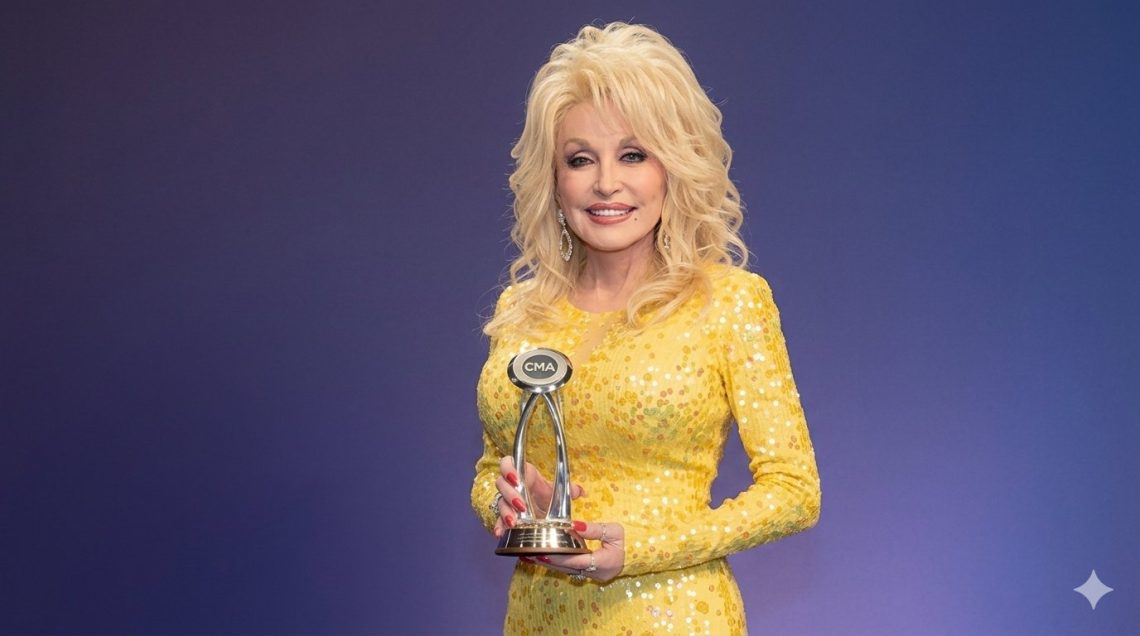
Dolly Parton’s Rhinestone Leadership: What Courage, Vulnerability and Authenticity Can Teach Us
You do not have to become less complicated, less visible or more acceptable to lead well.
I was never especially invested in Dolly Parton’s music.
There. I have said it.
I knew the songs, of course. I knew the voice, the wigs, the rhinestones, the jokes and the cultural shorthand. I knew Dolly as the woman who could make a double entendre sound wholesome enough for Sunday school and sharp enough for a boardroom.
But I was not what anyone would call a devoted fan.
What drew me to her was not the playlist. It was the persona and, more importantly, the person she appeared determined to remain beneath it.
Dolly Parton understood something many leaders spend years trying to learn: two apparently opposing things can be true at the same time.
You can be glamorous and grounded.
You can be commercially successful and deeply generous.
You can be private and profoundly influential.
You can be feminine without being ornamental.
You can be soft without being weak.
You can be underestimated and still become impossible to ignore.
That is why Dolly’s life offers more than a celebrity biography. It offers a leadership lesson for anyone trying to build an authentic life in a world that rewards performance but quietly punishes difference.
Dolly Parton died on August 25, 2026, at the age of 80, after a brief battle with cancer. Her public life was enormous, but the principles beneath it were surprisingly practical: know who you are, tell the truth about what shaped you and use your influence to create something that continues beyond you.
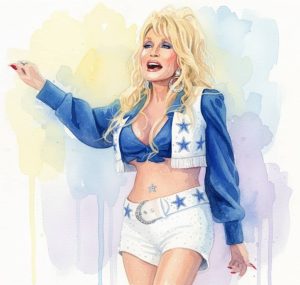
The courage to be visibly yourself
Dolly Parton did not make herself easier to digest.
She did not sand down her femininity to be taken seriously. She did not abandon her exaggerated appearance to prove that she had an intelligent mind. She did not dress quietly so people would focus on her songwriting, business instincts or philanthropy.
She arrived as Dolly.
The hair was high. The clothes were bright. The figure was stylised. The humour was mischievous. The voice carried both Appalachian history and professional precision.
For a feminist and free thinker, there is something particularly instructive about this. Women are often told that credibility requires strategic disappearance. Be attractive, but not too attractive. Be ambitious but not intimidating. Be warm, but not emotional. Be intelligent, but do not make anyone feel intellectually inferior.
Dolly rejected the entire exhausting instruction manual.
She did not confuse seriousness with solemnity. She knew that a woman could look “overdressed,” speak plainly and still understand contracts, audiences, ownership, branding and long-term value.
Her appearance was not evidence that she lacked depth. It was evidence that depth does not have a dress code.
That distinction matters in leadership.
Authenticity is not simply “being yourself” in the abstract. It is the willingness to stop editing out the parts of yourself that other people find inconvenient, unserious or unfamiliar.
Dolly’s courage was not only that she looked different. It was that she refused to let other people’s assumptions become her self-concept.
Vulnerability is not weakness
Dolly Parton’s public confidence was often so polished that people could mistake it for invulnerability.
But her story was rooted in vulnerability.
She came from rural poverty in the Great Smoky Mountains of Tennessee. She was one of 12 children, raised in a home without electricity, and her father could not read or write. The family Bible was reportedly the only book in the house.
That history could easily have become something to conceal.
Instead, Dolly made it part of her leadership story.
This is where vulnerability becomes useful; not as public oversharing, but as honest meaning-making. Vulnerability asks:
- What shaped me?
- What did I lack?
- What did I learn from it?
- How can my experience become useful to someone else?
Dolly did not merely say, “I came from poverty.” She transformed that fact into a philosophy about opportunity, literacy and imagination.
In 1995, she launched the Imagination Library through the Dollywood Foundation in honour of her father. The programme began in her home county and grew into an international literacy initiative that sends children a free, age-appropriate book every month from birth to age five. By September 2026, more than 336 million books had been distributed globally.
That is vulnerability with infrastructure.
It is one thing to tell a moving story about where you came from. It is another to build a system that helps other people avoid the limitations you experienced.
The lesson for leaders is simple: your wounds do not have to become your identity, but they can become part of your contribution.
The freedom to define a meaningful life
Dolly and Carl Dean were married for nearly 60 years. Yet they did not have children.
That fact is worth discussing; not because a woman’s life requires an explanation, but because society continues to treat motherhood as the default measure of female fulfilment.
Parton was candid that she did not feel a strong “burning” desire to become a mother. She also acknowledged that health challenges, including endometriosis and a partial hysterectomy, shaped her life. At other points, she explained that not having children gave her and Dean the freedom to focus on her career, business and philanthropy.
There is no single lesson here about whether women should or should not have children.
The lesson is about refusing to outsource the definition of a successful life.
Dolly did not follow one socially approved script. She and Dean built a marriage that allowed for difference: she was highly visible, while he remained intensely private and largely outside the celebrity machinery.
That contrast is not a contradiction. It is a reminder that intimacy does not require identical personalities, public presentation or professional lives.
Parton’s choice also complicates the way we understand care. She did not become a mother, but she invested deeply in children’s futures. She once framed her relationship to children through the idea that “everybody’s kids” could be hers, connecting that vision to the Imagination Library.
This is not an argument that philanthropy replaces parenthood. It is an argument that nurturing is larger than one social role.
Some people build families biologically. Others build schools, movements, businesses, communities, scholarships, libraries or safer futures.
A mature society should be able to honour all these forms of care without ranking them.
The power of productive contradiction
Dolly Parton’s public identity worked because it contained contrasts that many people assume cannot coexist.
What people often separate | What Dolly Parton demonstrated |
Femininity and authority | A woman can embrace glamour and still command a business empire. |
Humour and intelligence | A joke can open a door that a lecture cannot. |
Ambition and generosity | Success can create responsibility rather than entitlement. |
Privacy and influence | You do not have to reveal everything to matter deeply. |
Faith and independent thought | Spiritual language can coexist with personal agency. |
Humility and self-belief | You can remember your roots without shrinking your reach. |
This knowledge is useful beyond celebrity culture.
Many professionals are trapped by the expectation that their identity must be easy to categorise. The creative person must be disorganised. The coach must be endlessly calm. The feminist must be severe. The entrepreneur must be aggressive. The educator must be formal. The leader must always know what to do.
Human beings are not brand guidelines.
We are layered, sometimes inconsistent and frequently evolving. Authenticity does not mean presenting a perfectly coherent personality. It means being honest about the whole person, including the tensions.
You can be a holistic educator who values softness and still set firm boundaries. You can be a feminist who enjoys beauty and still critique the systems that commodify women. You can be compassionate without becoming available to everyone. You can be ambitious without making achievement your ‘god’.
Dolly’s example is liberating because she did not ask permission to be a paradox.
Leadership that outlives applause
Fame is temporary. Systems are more durable.
Dolly understood this. Her career produced songs, films, businesses and performances, but her literacy work created a structure designed to continue helping children without requiring her physical presence.
The Imagination Library’s shared funding model allows the Dollywood Foundation and local partners: such as schools, businesses, organisations and individuals to sustain the programme in different communities.
One could easily call this strategic leadership: turning personal conviction into a repeatable model.
It is also a useful test for anyone building a platform, organisation or personal brand:
- Does the work depend entirely on my personality?
- Have I created processes others can carry forward?
- Is my message visible in the systems I build?
- What will remain useful when people stop applauding me?
Parton’s literacy legacy became powerful because it was not merely symbolic. A child received a book with their own name on it. Families watched children wait by the mailbox. Communities adapted the model. The idea became tangible.
As the Los Angeles Times reported, the programme had distributed more than 330 million books across several countries, while its organisers described it as a working legacy built to keep doing good.
The most meaningful leadership is not only inspirational. It is operational.
It leaves behind tools, access, confidence and possibility.
What we can practise now
Dolly Parton’s life does not ask us to imitate her image, career or personality. It asks us to examine the parts of ourselves we have been pressured to minimise.
Try these five questions:
- What part of my identity have I been hiding to appear credible?
- What difficult experience could become a source of service rather than shame?
- Which social expectation am I following without consciously choosing it?
- Where do I need to replace performance with honest self-definition?
- What am I building that can continue helping people beyond my direct involvement?
The answers may not be glamorous. They may point to a boundary, a difficult conversation, a new project or a decision to stop apologising for a life that does not resemble someone else’s template.
That is courage in its less cinematic form.
The book is never just the cover
Dolly Parton once joked that she never expected to be known as “the book lady; the “painted,” overexaggerated and overdressed lady, perhaps, but not the book lady. Then she delivered the punchline: you cannot judge a book by its cover.
It was a joke, but it also captured the architecture of her life.
The cover was loud. The substance was consistent.
The persona attracted attention, but the values-built trust. The wit made people comfortable, but the work made the difference. The glamour created a memorable image, but the generosity gave that image meaning.
That is the distinction between branding and authenticity.
Branding is what people recognise. Authenticity is what they experience repeatedly.
Dolly Parton’s leadership was not convincing because she appeared perfectly sincere at every moment. It was convincing because, across decades, her choices kept returning to the same core commitments: imagination, hard work, kindness, independence and access to opportunity.
I may never become a devoted listener of her music.
But I can still learn from Dolly Parton.
I can learn that a woman does not need to become less feminine to become more powerful. That a private life can support a public mission. That not having children does not make a woman’s life incomplete. That vulnerability can be converted into service. That humour is not the opposite of wisdom.
And perhaps most importantly, I can learn that leadership becomes more trustworthy when it sounds like a whole human being; not a carefully approved version of one.
Dolly Parton wore the rhinestones.
She also did the work.
That is the part worth remembering.
References
- Reuters. “Dolly Parton, Queen of Country Music, Dies at 80.” Reuters, 25 August 2026.
- The Tennessean. “Dolly Parton Never Had Children. She Said It Gave Her the Freedom to Thrive.” The Tennessean, 26 August 2026.
- Los Angeles Times. “Dolly Parton’s Contributions to Literacy Will Outlive the Star.” Los Angeles Times, 26 August 2026.
- BBC News. “How Dolly Parton Helped the World—from Children’s Books to COVID-19 Vaccines.” BBC News, 26 August 2026.
Citation Note
The article draws primarily on reporting from Reuters, The Tennessean, The Los Angeles Times and The BBC, providing supplementary context on Parton’s philanthropy, marriage, career and public legacy.

Ariana Oluwole is an executive coach, holistic educator, and Multipotentialite Entrepreneur. Her flagship coaching program ‘Live and Lead Your Best Life’ provides holistic strategies for Africans, the diaspora, and professionals navigating multiple cultures and teams. When she is not Empowering People, Teams & Systems to Thrive. Queen A can be found speaking to plants with a nice cup of tea.
Ariana Oluwole
Ariana Oluwole is an executive coach, holistic educator, and Multipotentialite Entrepreneur. Her flagship coaching program 'Live and Lead Your Best Life' provides holistic strategies for Africans, the diaspora, and professionals navigating multiple cultures and teams. When she is not Empowering People, Teams & Systems to Thrive. Queen A can be found speaking to plants with a nice cup of tea.



6 Comments
Antoinette Sefoi
Absolutely. Dolly Parton is such a powerful example of this. She never felt the need to choose between being feminine and being formidable, or between success and generosity. Her strength has always been in embracing the full picture of who she is and that authenticity is exactly why her influence is a huge.
Ariana Oluwole
We agree with you wholeheartedly! She had the recipe to authenticity – Do share on.
Josephine Kamara
This is quite a beautiful read. I love Dolly’s music, but I never knew I could get a whole leadership lesson from her life like this and how one can turn the simplest life habits, behaviours, and values into a real framework for authentic leadership. And look at me, wanting to shrink myself just to be digestible. Thank you Ariana. I’m sitting with these questions:
What part of my identity have I been hiding to appear credible?
What difficult experience could become a source of service rather than shame?
Which social expectation am I following without consciously choosing it?
Where do I need to replace performance with honest self-definition?
What am I building that can continue helping people beyond my direct involvement?
Ariana Oluwole
So deeply honoured. Please do not keep these revelations to yourself. Sharing is caring! Pass these lessons on to your mentees,colleagues, your friends, or anyone else who might be holding their breath and trying to shrink.
Onike Spencer-Coker
I grew up listening to Dolly Parton in my house as a child. I have been a lifelong fan of her music and country music in general, in particular female country artists.
Listeners to me on Capital Radio often heard me refer to myself as “the Dixie Chick”, due to my love of the group Dixie Chicks. “9 to 5″and ” Best Little Whorehouse in Texas” (lmao!) are two of my favorite Dolly Parton movies and her collaboration with Kenny Rogers on song after song is non pareil.
I say all this to say, I know that woman’s story as a fan and I deeply appreciate your article @arianadiaries.
In interviews, Ms. Dolly never named herself a ‘feminist’, but she has always been one of MY feminist icons.
Rest in peace, Dolly Parton.
Ariana Oluwole
Thank you so much for reading and connecting so deeply with the article, Nicky!
First of all, “the Dixie Chick” is the ultimate radio moniker, and anyone who jams to 9 to 5 and The Best Little Whorehouse in Texas has impeccable taste.
But wait….Rest in peace?!Let us clear up a major piece of accidental misinformation: Dolly Parton is very much alive and well! As the great woman herself might say, she is not done working that 9-to-5 just yet.