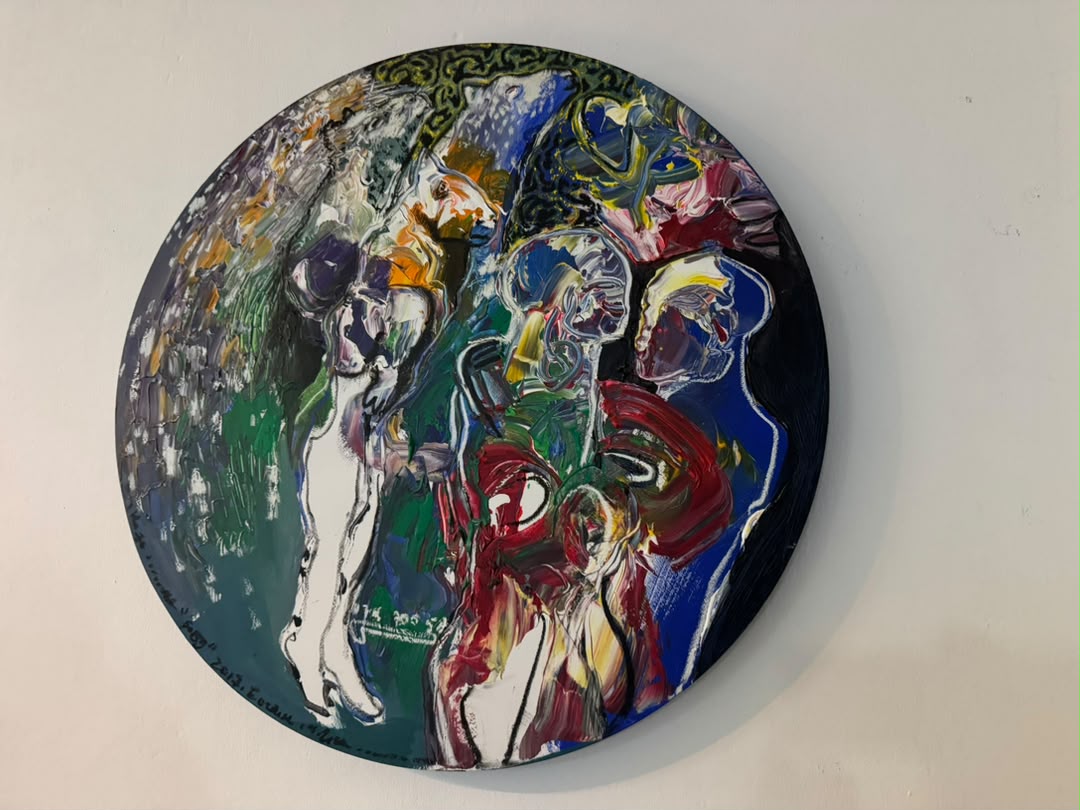
When Art becomes an Archive: Inside Unx Exhibition Passage
In a room filled with artworks from across West Africa, history was not sitting quietly on the walls. It was moving.
It moved through colour, sculpture, music and stories passed from one generation to another. It moved through the memories of people who travelled, carrying their languages, beliefs and traditions with them. And it raised a question that is easy to overlook when standing before a work of art:
what if art is an archive too?
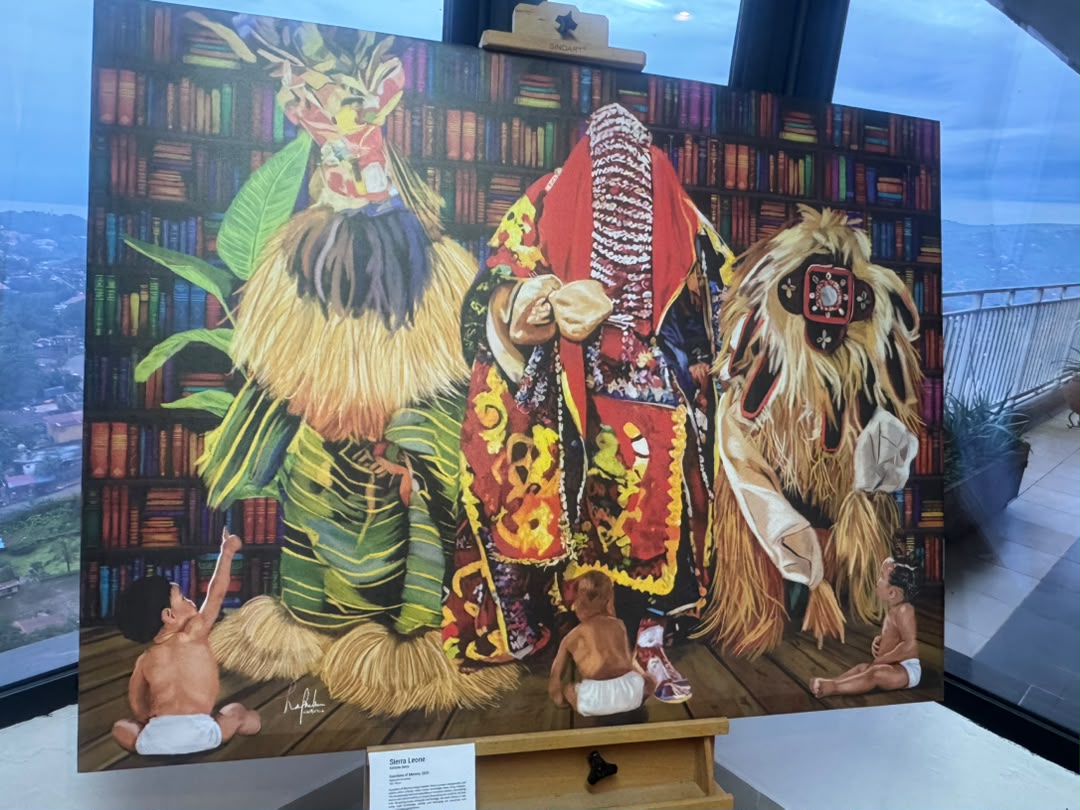
That question lies at the heart of Passage, an exhibition that brought together artworks representing 15 countries of the Economic Community of West African States. First presented in Sierra Leone at the ECOWAS Summit held in July 2026 at the Julius Maada bio Conference Centre in Lungi, the exhibition invited visitors to look beyond aesthetics and consider the histories embedded within the works.
The fifteen (15) countries were a representation of Benin, Burkina Faso, Cape Verde, Cote d’Ivoire, The Gambia, Ghana, Guinea, Guinea-Bissau, Liberia, Mali, Niger, Nigeria, Senegal, Sierra Leone and Togo, PASSAGE reflects both the diversity of West Africa and the cultural continuities that connect its histories, traditions and lived experiences. Each contribution brings a particular artistic or cultural perspective, allowing audiences to encounter familiar histories alongside those of neighbouring countries.
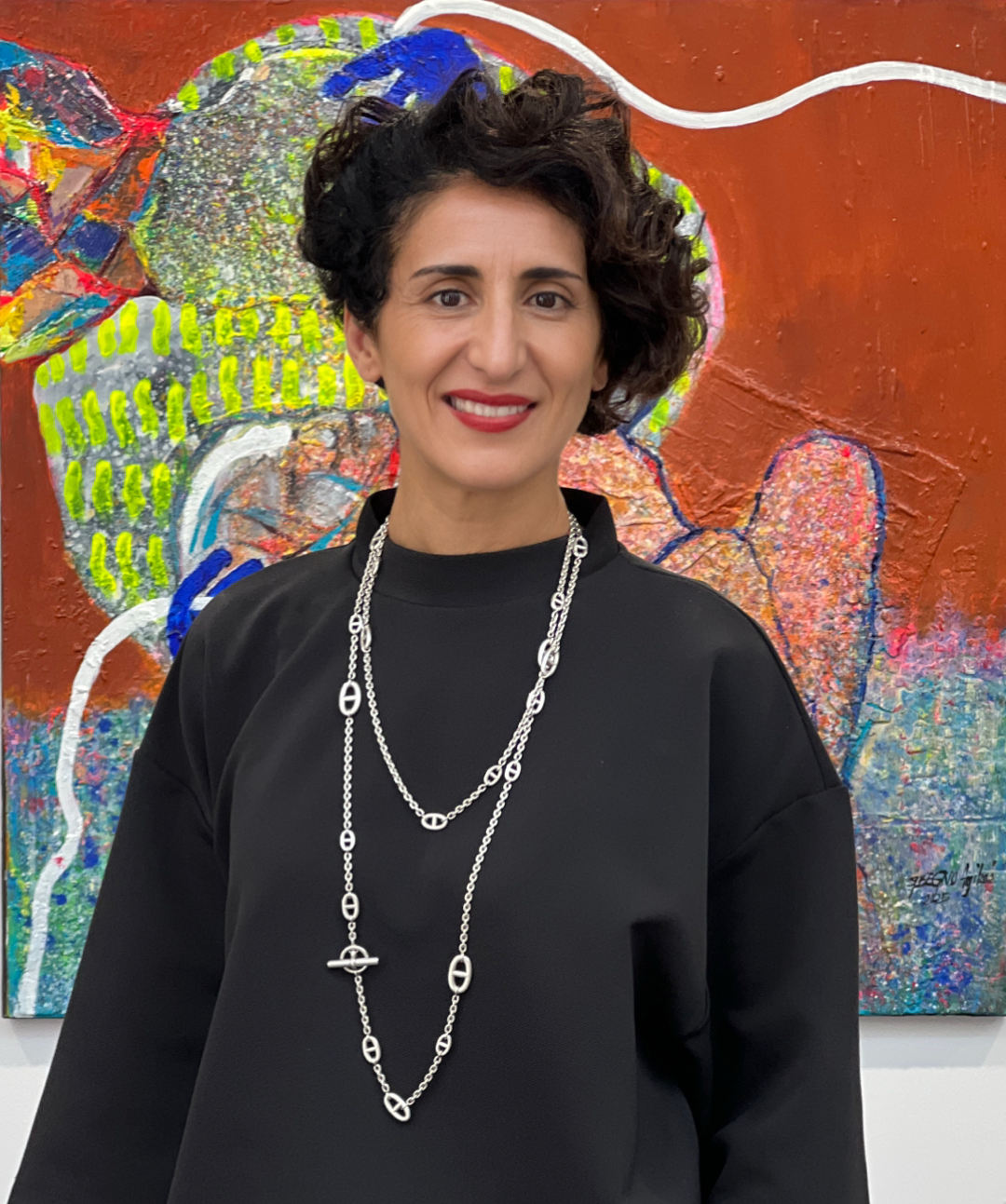
The curator of the exhibition, Sarah Hachi-Duchêne said that her relationship with African art began after she moved to Nigeria and found herself searching for something that existing galleries were not providing. Rather than simply looking elsewhere, she created a space through which she could present African art and, equally help audiences engage with the stories behind it. Hence the birth of UNX a platform where every piece of art comes to life.
“The question most people forget to ask is, ‘What is the story behind each artwork?’” she says. It is a deceptively simple question. Yet it changes the way an audience looks at an art when educated.
For Sarah Hachi-Duchêne, the exhibition is guided by a simple idea:
“Art is one of the continuities through which West Africa carries its histories into the present. Their meaning is renewed with every generation
A painting can be beautiful, but beauty alone does not necessarily tell us where it came from, what inspired it, what cultural memory it carries or what the artist is attempting to preserve. Understanding those layers is part of understanding Africa itself, she says.
Her aim, she explains, is to help audiences appreciate the heritage represented in African artworks and recognize how that heritage has shaped the continent’s way of life.
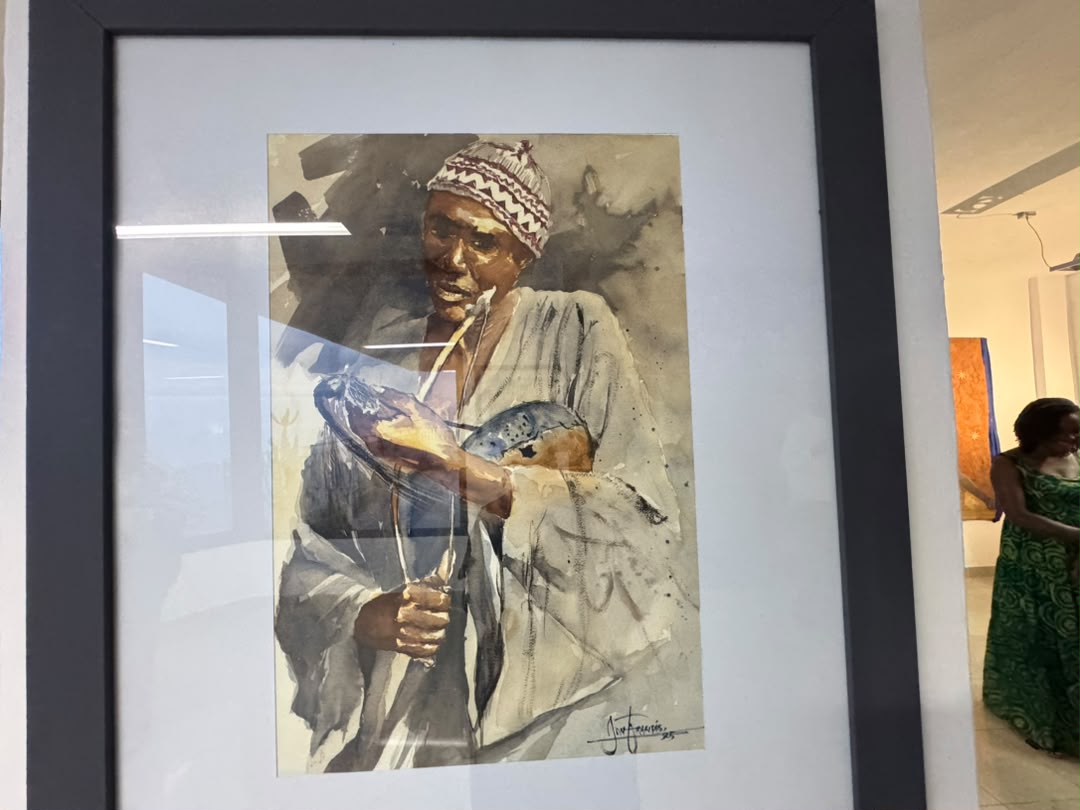
The Griot and the Gallery
For generations, West African societies have preserved history through oral tradition. The griot, a keeper of stories and memory, occupies a particularly important place within that tradition. Before history was routinely documented in books and archives, knowledge travelled through people. Stories were remembered, performed and retold. Genealogies were preserved. Victories and losses were recalled. Values were passed from elders to children.
The Passage Exhibition places this tradition in conversation with visual art.
The exhibition asks visitors to consider a simple but profound possibility: if oral tradition is one archive of West Africa, could art be another? The griot carried memory through words. The artist carries it through form. Seen this way, a work of art becomes more than an object displayed in a gallery. It becomes evidence of a particular way of seeing the world.
That is why the exhibition extended beyond paintings and sculptures. Music and the history of the griot were incorporated into the experience, allowing visitors, including younger audiences, to encounter cultural memory through more than one medium. The result was not simply an exhibition about art. It was an invitation to reconsider where history lives.
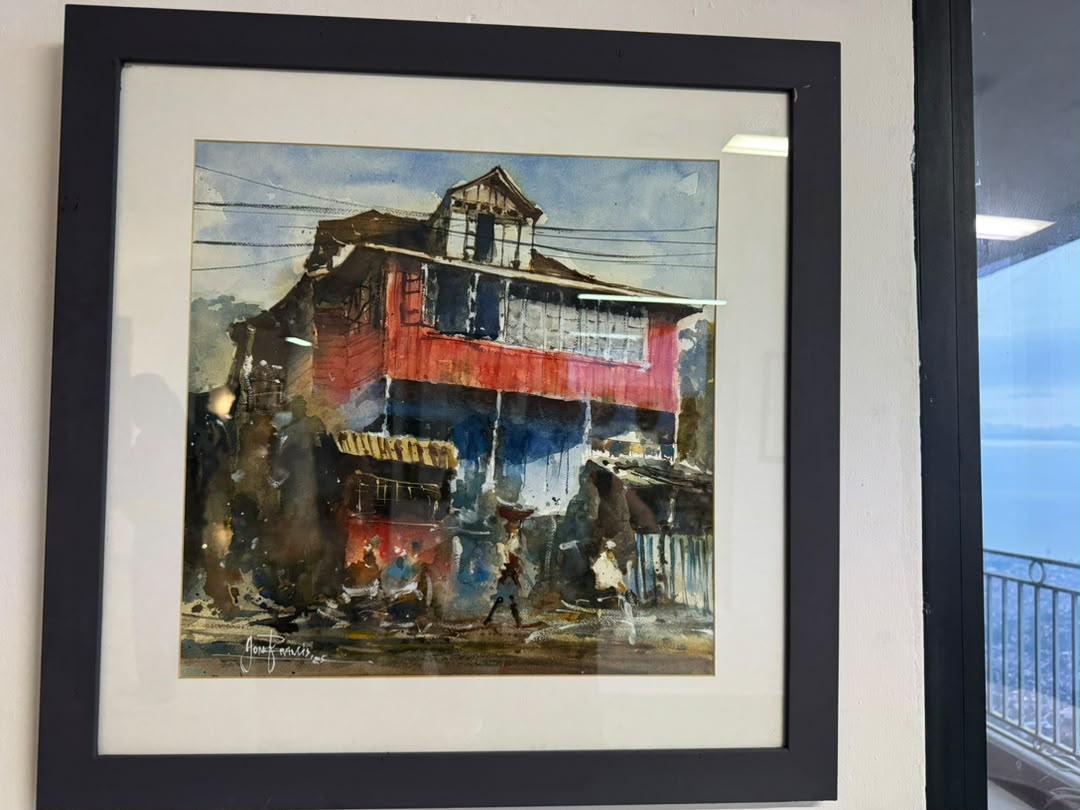
The Bod Os
The idea becomes even more powerful when the story moves from the gallery wall to architecture. Among the structures connected to Sierra Leone’s architectural heritage are its distinctive “Bod Os” board houses. Their wooden façades and craftsmanship tell a story that cannot be separated from the people who built them and the histories they carried. The buildings are also connected to the story of the Krios who settled in Sierra Leone, bringing with them experiences, traditions and architectural influences shaped by their own journeys. Here, history becomes physical.
A building can preserve memory without saying a word. Its materials, design and construction can reveal something about the people who created it, the societies they came from and the circumstances that brought them to a particular place. It is another form of storytelling.
A Region in Motion
The title Passage therefore carries a meaning much larger than movement from one location to another. Across West Africa, people have always moved. Political authority travelled with people before it was necessarily defined by modern territorial borders. Languages crossed boundaries. Religious beliefs moved between communities. Artistic forms were adapted, exchanged and reimagined. Culture did not remain still neither did art. “In West Africa, art has never been separated from life,” It has accompanied social, spiritual and political practices, marked rites of passage and given visible form to knowledge and values.
That is perhaps what makes the exhibition particularly significant in Sierra Leone. In a country whose own history has been shaped by migration, settlement and cultural exchange, the idea of passage is not abstract. It is part of the national story. For visitors, the challenge of Passage is not simply to look at African art differently. It is to understand that looking itself can become a form of historical inquiry.
The next time a visitor stands before a painting, sculpture or building, there is another question to ask beyond whether it is beautiful. History is often imagined as something found in books, museums and official records. But across West Africa, memory has always had many homes. Perhaps that is the most enduring message of Passage: cultures are not only remembered by what they write down. Sometimes, they are remembered by what they create.


You May Also Like

HOW TO AVOID UPPER RESPIRATORY TRACT #VIRUS DURING THE HOLIDAYS
Unite to End Digital Violence Against Women & Girls: 2025 Action Guide